
Reading time: 5 min

Low observability is the ability of a platform to minimise its electromagnetic radar signature, reducing its probability of detection by hostile or surveillance radar systems. For a drone operating in contested environments, it is a direct survivability driver.
The key metric is the Radar Cross Section (RCS): it quantifies how much radar energy a target reflects back toward the transmitting antenna. The lower the RCS, the harder the drone is to detect and the shorter the detection range.
How it works ?
RCS reduction relies on two complementary strategies, often combined:
- Platform shaping redirects radar reflections away from the threat radar through geometry alone.
- Radar-absorbing materials (RAM) dissipate the incident electromagnetic wave as heat within the material, rather than reflecting it. This is where HYMAG'IN's technology plays a key role.
Absorber performance is characterised by its Reflection Loss (RL):
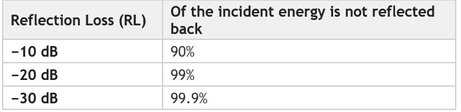
Two mechanisms contribute to Reflection Loss (RL) in FILAMAG absorbers: material absorption, where dielectric (ε″) and magnetic (μ″) losses convert electromagnetic energy into heat, and destructive interference, where reflections generated by the structured geometry cancel each other at targeted frequencies.
3D printing is the key differentiator, enabling advanced architectures such as honeycomb and multi-scale structures that enhance broadband absorption while maintaining lightweight designs.
When to apply ?
UAVs & combat drones :
Drones in surveillance or combat missions face growing threats from ground-based and airborne radar. Integrated into structural components or antenna radomes, FILAMAG absorbers reduce Radar Cross Section (RCS) across L- to K-bands, with a demonstrated detection range reduction of up to 2.7 km in the S-band.
Military aircraft & helicopters :
3D-printed structures conform to complex aerodynamic surfaces (leading edges, inlet ducts, control surfaces, radomes), where lightweight absorbers replace rigid panels or heavy ferrite tiles.
Naval vessels & radar masts :
Masts and superstructures are high-RCS zones. FILAMAG integrates into mast cladding and equipment housings to reduce radar reflections in targeted frequency bands.
What's the HYMAG'IN's point ?
Every FILAMAG solution for low observability starts with an electromagnetic simulation. Our RF engineers model your platform geometry and operating frequency bands, design the optimal absorber architecture, and validate performance through RF measurements before delivery.
How FILAMAG meets the need:
- Geometry-driven performance: optimises absorption at your target frequency without increasing thickness.
- Lightweight: structured geometries significantly reduce mass compared with solid sheets.
- Conformal integration: FILAMAG-F follows curved surfaces and fits existing geometries.
- Simulation-validated: every design is checked before manufacturing.
- Fast delivery: 1–4 weeks, manufactured in France.
To learn more about our low-observability solutions, simulation results, and material performance, read the full technical article.

